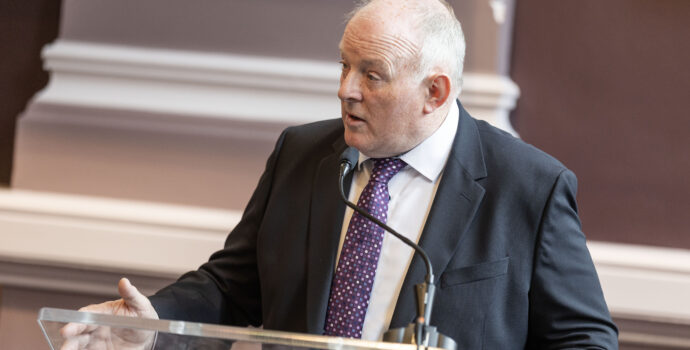
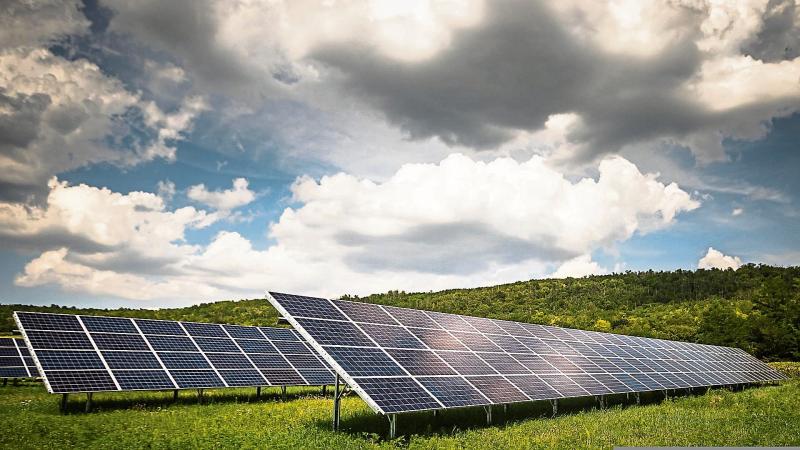
Addressing the Joint Oireachtas Committee on Housing, Local Government and Heritage today on planning guidelines for solar farms, IFA Farm Business Chair Bill O’Keeffe said IFA supports the introduction of planning guidelines in this area.
“They must be based on consultation with all stakeholders in rural communities, with farmers being central to this consultation. We need to understand the impact this will have on agriculture as a sector, but also on the family farm structure and viability of these farms in areas where large scale solar farms are being developed.”
Grid Capacity
Utility-scale solar farms are generally located where grid connection and capacity are available. This is usually in areas close to the larger population areas such as the Dublin commuter belt regions of north county Dublin, counties Meath, Kildare and Carlow. Large-scale solar development has also taken place in Cork and many more are in the planning phase.
Solar developments in these more densely populated regions will therefore have a greater effect on local communities and are likely to lead to greater community opposition. Planning guidelines must recognise the deficits in the national electricity grid infrastructure. Solar farm developments should not be given planning permission in sub-optimal locations simply because there is sufficient electricity grid capacity in the location.
Bill O’Keeffe said there must be greater investment in the grid infrastructure by EirGrid to allow further solar farm developments to be located in the most suitable area that minimise the impact on local communities, local agriculture and the environment.
There is funding of 60% available to farmers through the Targeted Agricultural Modernisation Scheme (TAMS). However, there are real fears that this will not be sufficient to meet future demand. Accordingly, IFA is seeking a dedicated renewable energy grant scheme, separate from TAMS, with funding provided from the €3bn Climate and Nature Fund for on-farm renewable investments, including roof-top solar.
Farmer and Community Consultation in Solar Farm Planning
The IFA Farm Business Chair said planning guidelines for solar farm developments should take account of the long-term impact that large scale solar farm developments will have on the local community, and farmers in the area.
A large-scale solar farm will not support the local dairy co-op, feed and farm supply merchants, beef or sheep processors, livestock marts, machinery dealers, nor the many different professional service providers, such as vets, accountants, agricultural advisors and agri contractors.
IFA would also like to see greater farmer involvement, including a degree of ownership in new renewable developments, including solar, wind and AD. At the moment, farmers lease the land to develop these projects, but a level of ownership option for farmers in future developments should be available.
Policy in Other Countries
The United Kingdom (UK) has a grading system for agricultural land ranging from Grade 1 (excellent quality) to Grade 5 (very poor quality).
The National Planning Policy Framework (NPPF) sets out that the economic benefits of Best and Most Versatile Agricultural Land (BMVAL) should be recognised in planning applications for solar developments.
Based on the agricultural land classification (ALC) scheme, BMVAL is excellent to good quality land in grades 1, 2, and 3a.
Where significant development of agricultural land is involved, poorer quality land should be used in preference. The availability of land used for food production should be considered alongside other considerations when deciding what sites are most appropriate for development.
Since last year, France requires that any solar installations on agricultural land guarantee a loss of agricultural production of less than 10% and must not cover more than 40% of the farmland.
Italy also promotes the development of agri-voltaic solar installations where agricultural production can continue in tandem with the solar installation.
On the other hand, Germany has introduced solar-priority zones and provide incentives to convert farmland into solar farms.
Read the full submission here.