IFA Launches Milking365 Fresh Milk Roadmap
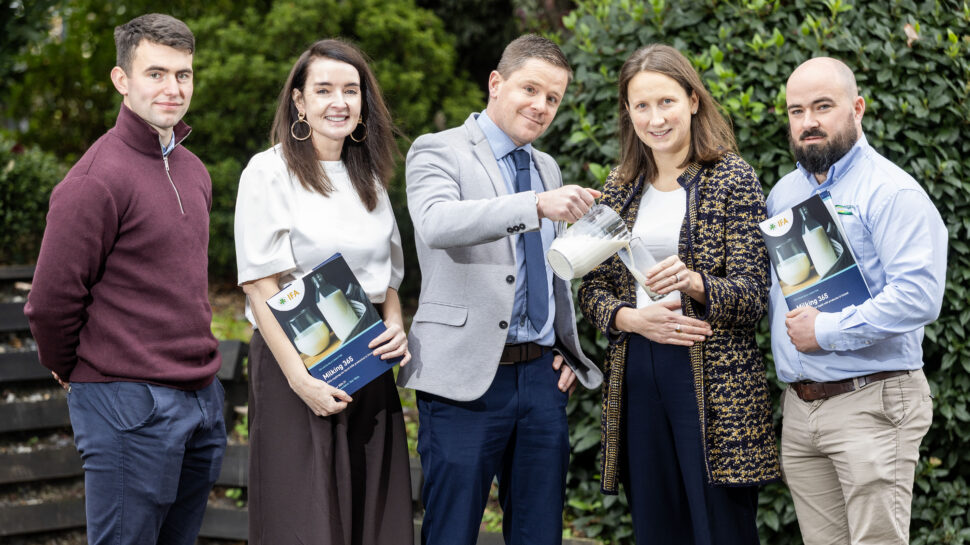
IFA’s Liquid Milk Committee has launched its fresh milk roadmap, Milking365, for winter 2026-27.
The Milking365 roadmap highlights the need for fresh milk producers to receive a greater return for the product they supply.
Fresh milk producers are required to milk cows all year round, 365 days of the year, to ensure a continuous supply of milk in our shops, cafes and restaurants. This significantly increases their costs of production.
Representatives from processors, retailers and farmers attended the launch at the Irish Farm Centre. They heard that higher input costs have pushed up the cost of producing fresh milk, while the farmgate price for milk remains low.
IFA Liquid Milk Chair Henry Dunne said producing a year-round supply of fresh milk requires extra labour and incurs substantial additional costs.
“Processors’ premiums for liquid milk production have been eroded by the considerable decline in the base milk price over the past two years. A fairer share of the existing retail price is what we are seeking,” he said.
“IFA is asking retailers to return seven cents extra per litre to fresh milk farmers this winter to help cover higher input costs amid weak base milk prices. It also wants farmer-owned brands stocked in all grocery shops. Customers should also look for milk carrying the National Dairy Council logo,” he said.
IFA is calling on the National Milk Agency to ensure fresh milk farmers are adequately compensated, and on the Agri-Food Regulator to bring transparency to producer, processor, and retailer margins.
The National Milk Agency was established by the Oireachtas to regulate the supply of milk for liquid consumption throughout the State in accordance with the provisions of the Milk (Regulation of Supply) Act, 1994.
Seven milk processors handle most of Ireland’s fresh milk and pay a premium above the standard manufacturing milk price. Five major supermarket retailers then dominate the grocery market, with a combined share of 94%.
An estimated 70% of retail fresh milk sales are now private label, sold at an estimated average discount of 15% compared with farmer-owned brands.
Private-label milk sells at a lower price than branded milk, and persistent pressure to cut prices has margins for fresh milk producers to the point that there are now 66% fewer producers (1,094) than in 1995 (3,344).
The roadmap Milking365 is here.