Political Commitments Needed for CAP Budget
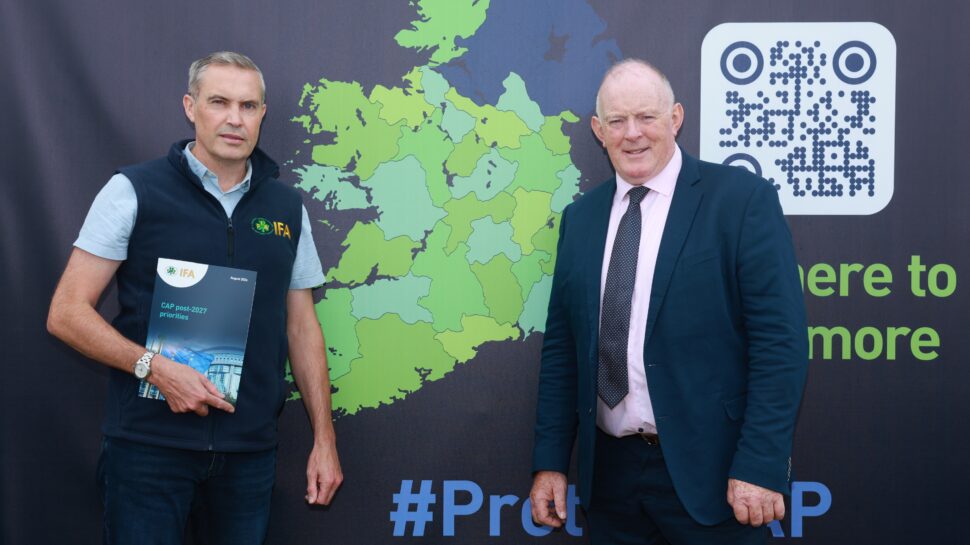
IFA President Francie Gorman has called on the Taoiseach and key political figures to stand by Irish farmers in upcoming negotiations and deliver a stronger proper CAP Budget that’s fit for purpose.
He was responding after a meeting of leaders of six EU Member States (Germany, Sweden, Austria, Denmark, the Netherlands and Finland), net contributors to the overall EU Budget in Berlin last week, where they called for drastic cuts to proposed EU spending, across all policy areas, and greater alignment between contributors and beneficiaries.
“The Taoiseach and Tánaiste have key roles to play in designing the next EU Budget. For the Tánaiste in what’s proposed, and the Taoiseach in what’s agreed.”
“What’s agreed will decide what’s available within CAP and other programmes in the years ahead. But approval requires unanimity across all 27 Member States to progress, and the Taoiseach cannot yield simply to progress”.
“Most of Ireland’s funding from the EU comes via CAP payments, and as a net contributor ourselves, we can’t accept or countenance any reduction in the CAP budget that we have today. We need our Taoiseach and Tánaiste to stand tough on this, and back Irish farm families”.
“Achieving an adequate budget for an effective CAP was among the priorities of the EU Presidency. They can’t renege on that now.”
“Whatever is eventually agreed, there will certainly be more than what was there the last time round, and enough to secure at least previous CAP allocations. It’s about political decisions and negotiations between now and year end that will decide how it’s divvied out. European farmers and CAP can’t pay the price for new priorities or lower than forecast elevated budgets”.
“We’ve analysed the economic realities for farm families and rural areas of the current proposals (available here) and they’re stark and frightening. Government leaders and Department officials will find it’s the main topic at the Ploughing in three weeks’ time. To accept any cut to CAP payments would be a direct hit to our oldest and largest indigenous economy,” Francie Gorman concluded.