Animal Health Council Report July 2025
Analyses of TB programme costs to farmers commissioned by IFA with IFAC
DAFM have consistently outlined the cost incurred by the national exchequer of the TB eradication programme. Costs for on farm valuations, vet fees, compensation schemes and the wildlife programme are published quarterly but the direct and indirect contribution of the farmer up to this point has not been quantified.
IFA commissioned this analysis through IFAC to determine the full extent of farmers contribution to the programme.
The headline figure from the report shows farmer contributions to be over €150m annually, with labour alone extending to over €55m before any other associated costs or losses are factored in.
IFA have made detailed proposals to the Minister for Agriculture Martin Heydon and his senior officials on the enhancements necessary to the TB programme to bring the disease back under control.
IFA proposed enhancements to the TB programme
- Government must commit to providing the resources necessary to implement an effective and efficient TB programme consistently throughout the country, this includes financial, veterinary, technical and administrative supports.
- The Wildlife Control Programme must revert to density reduction to bring the badger population to the previously identified DAFM figure of a maximum of 0.5 badgers/sq km to reduce the potential of badger to cattle transmission.
- Deer Management Units (DMUs) as part of the National Deer Management Strategy to reduce deer numbers must be established in all high prevalence TB areas where deer are present.
- The DAFM must cease communications on Herd Categorisation and Risk Based Trading. This approach does not stop the movement of potentially TB infected animals, unfairly and unnecessarily devalues farmers livestock who through no fault of their own have recently exited a TB restriction. The recent figures of C10 herds who have TB breakdowns also further discredits this approach
- The DAFM must implement density reduction of all TB susceptible wildlife in advance of any major ground disturbance works and deforestation in recognition of the recent UCD study findings which were presented to the TB Forum if we are serious about trying to stop new TB breakdowns.
- The DAFM in consultation with farm organisations must finalise and implement contract rearing Risk Management Plans.
- The DAFM must develop, in consultation with farm organisations, practical Risk Management Plans for all farmers to be used through the farmers own Private Veterinary Practitioner (PVP) to help drive awareness of TB risk and provide advice on appropriate precautions.
- To address the concerns raised by the DAFM in relation to the lower sensitivity of the SCIT test and the potential for TB infected animals to remain within herds the more sensitive GIF test should be used in herds where within herd TB spread is confirmed.
- To complement the proposal at point 8 and further reduce the likelihood of Higher Risk TB animals leaving dairy herds, a compulsory pre movement test for dairy cows entering dairy herds should be introduced. This measure when applied with point 8 significantly reduces the likelihood of TB introduction to dairy herds.
The combination of using the GIF test in the original breakdown in herds, which compensates for the lower sensitivity of the SCIT test, reduces the likelihood of TB infected animals remaining in the herd and the compulsory requirement then for all cows entering dairy herds provides additional protection to the purchasing herd. The proposal focuses just on dairy cows entering dairy herds as these are the herds and the animals that proportionately have most TB when measured on Herd Incidence and APT. This measure is not appropriate or necessary for consideration in suckler herds based on their Herd Incidence and APT figures.
- The DAFM must promote the use of TB resistant bulls.
- The DAFM must advance development of an effective cattle vaccination for TB and a suitable test to differentiate vaccinated animals from infected animals while in parallel addressing the potential market access concerns at EU and international level.
- The DAFM must provide grant aid to farmers implementing bio security measures on farm that reduces wildlife access to critical areas.
- Recognising the need to intensify efforts in the TB programme in high risk and larger TB breakdowns, there is also a need to balance this in breakdowns that are not high risk. Factory lesion restrictions must be shortened where it is established there is no further TB reactors on the farm. 85% of these breakdowns do not disclose any further TB reactors on the farm, maintaining a restriction for 120 days spanning two 60-day tests on these farms is unnecessary.
TB Summit
IFA attended the TB summit convened by the Minister and subsequent bilateral meetings.
At the TB summit, IFA rejected a number of proposals put forward by the Minister, in particular around blacklisting of farmers through herd categorisation, risk-based trading, extended restrictions and unnecessary testing.
Following the summit meeting the Minister invited IFA to a bilateral meeting at which revised proposals were put forward by him and his senior officials. These proposals reflected a number of the key points made by IFA, including significant changes to the operation of the wildlife control programme and amendments to the more contentious issues of herd categorisation, risk-based trading, extended restrictions and additional testing but have not gone far enough in these areas.
Subsequent to this meeting the President wrote to the Minister and set out the key issues for IFA to be addressed;
These included;
- The immediate removal of the ceilings in the Live Valuation scheme
- A commitment all compensation and support schemes in the TB programme will be reviewed and enhanced to reflect the actual extent of losses on farms in the TB programme
- A commitment the resources necessary to implement an effective wildlife control programme and TB eradication programme will be provided
- Detailed response to all proposals put forward by the Minister which included rejection of herd categorisation, risk-based trading, extended restrictions and unnecessary additional testing.
We are awaiting the Ministers response.
Irish Deer Management Strategy Group
Following a tender process FRS has been awarded the tender to carry out the work of the Deer Management Strategy Group. To date they have a programme manager in place and have appointed 4 DMU managers with the rest to be hired before September 2025. For progress to be made there must be buy in from all stakeholders especially NPWS and Coillte whose lands the vast majority of wild deer are present on. The national manager and DMU coordinators must have the ability to organise for the removal of deer form these lands via private hunters. At present only NPWS staff are allowed to shoot deer on NPWS land. Progress needs to be made in this open season in reducing the number of deer.
Bluetongue
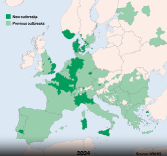
Bluetongue serotype 3 (BTV-3) was detected in the Netherlands in 2023 and has successfully overwintered in several countries. In 2024, the disease has been detected in The Netherlands, Germany, Belgium, France, Luxembourg, Denmark, Poland, Great Britain Czech Republic, Sweden, Austria, and Norway. A new serotype BTV-12 has been detected in The Netherlands in October 2024 with one case detected in the UK in February 2025. Genetically, it is unrelated to BTV-3 with its origins currently unknown. Other strains of Bluetongue stereotypes, BTV-4 and BTV-8, continue to circulate in other European countries with a more virulent strain of BTV-8 emerging in France in August 2023. This strain has more saver health implications with a high mortality rate amongst sheep flocks. There are approved vaccines available for both BTV4 and BTV-8 with different approaches being taken on the administration and cost burden in different countries.
Current situation
Currently there are 262 cases of BTV 3 confirmed in the UK and one case of BTV 12. On the 1st of July 2025 the restricted zone for bluetongue was extended to cover all of England. This will mean no premovement testing or permitting to move animals anywhere within England. Pre movement testing exemptions are to remain in place until the 30th of June.
Scotland and Wales will introduce pre movement testing for all susceptible animals from the 1st of July that are entering for any purpose other than direct to slaughter. There will also require a permit to move animals. This will all be at a cost to the farmer.
BTV-3 countues to circulate widely in mainland Europe. Other strains of the disease are also present in several countries such as BTV-1, 4 and 8 along with serotype 12 that was detected in the Netherlands.
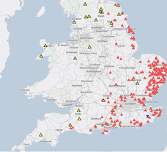
The approach by the Department of Agriculture is likely to mirror the EU and UK approach with the establishment of an eradication programme for Bluetongue virus. Measure likely will be,
- Initial 20km zone around the outbreak for a period of up to 72 hours to assess the epidemiological situation of the outbreak. From an epidemiological perspective zones and controls may differ depending on the location and susceptible species density etc. The zone will be increased up to 150km if the spread cannot be contained or is seen to have already spread within the zone.
- Infected animals will be immediately removed from the farm
- Live exports within the zone are immediately stopped
- If there is a restriction zone that crosses from NI to ROI or vice versa then exports will not be affected in the country that does not have the outbreak
Animals outside the restricted zone can continue to be exported and under certain precautions, transit through restricted areas to export.
BVD
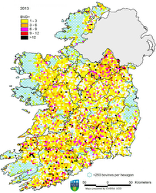
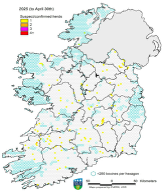
There is an increase in BVD rates year on year with some large breakdown on some farms this spring. The reduction in disease prevalence and vaccination has led to increasingly naive herds. DAFM must ensure that there are increased levels of vaccination available for farms surrounding outbreaks. Irish farmers have worked to reduce this disease to near eradication and this progress must be protected. In 2024 DAFM provided €3.75 million equating to €2.40 per calf for a max of 25 calves.
IBR
AHI proposed a program that will cost €40 million per year and have a 16-year timeline to achieve eradication, along with some movement controls on farms. The funding model remains the critical issue that must be addressed to advance a programme.
Veterinary Medicines
The Minister for Agriculture has signed the Veterinary Medicinal Products Regulation
- It is to come into effect in September 2025 for Antiparasitic products
- Until then Antiparasitic products can continue to be purchased without prescription
- IFA engaged proactively with all stakeholders throughout the process and continue to raise concerns with the recently signed Regulation
- IFA made a detailed submission to the Minister and his officials identifying the key issues to be addressed in the Regulation which was broadly supported by all stakeholders.
Background.
- Antiparasitic products became Prescription only Medicines following the publication of the EU Veterinary Medicines Regulation in 2019 and subsequent HPRA review of these products.
- Prior to this Ireland were the only country in the EU where these products were not POM’s
- The SI provides for vets on behalf of licenced merchants and Co-ops to prescribe for these outlets on completion of a Proper Assessment Protocol
- The farmers own vet will continue to prescribe based on their knowledge of the farm, and the animals on it as is current practice.
- There is a missed opportunity to broaden the supply base for farmers sourcing vaccines that are categorised as POM(E) medicines.
- These products have always been available only through veterinary pharmacies and vets without the need for a prescription and will continue to be available through these outlets.
- The validity period for Prescriptions for non-antimicrobial products has been set at 6 months
NVPS
During meetings with DAFM on NVPS, IFA raised a number of issues. The need for an on-farm supply of emergency use medicines, an agreement previously secured by IFA. The lack of visibility of the prescription to farmers, the timeline that prescriptions must be uploaded to NVPS and the flexibility to part fill prescriptions. DAFM has again accepted these needs. There continues to be IT issues for farmers authorising veterinarians on to the NVPS system which needs to be resolved as a priority. Until the system is fully functional then DAFM must delay the introduction of Veterinary Medicinal Products Regulation for antiparasitic products.
IFA are meeting with DAFM on this issue and the prescribing of antiparasitics in the coming weeks.
AMR training event
IFA were actively involved in the organisation and presentations on the day of the EU funded antimicrobial training event for farmers and veterinary practitioners held in Ireland. The event was well attended by farmers and veterinarians with a strong representation from the IFA animal Health committee.
New ER 1 Form (Herd number application forms)
IFA have had a number of meetings with DAFM on the new requirements for herd number applications. These changes were rolled out by DAFM in December 2024 without any consultation or discussion with IFA.
IFA are seeking changes to the new application form in particular around the area of new applicants for herd numbers.
Representation
- TB Forum
- TB Implementation Group
- TB Finance Working Group
- TB Technical Working Group
- TB Communications Group
- BVD IG
- Johne’s Disease IG
- IBR IG
- Interdepartmental INAP Stakeholder Group (AMR)
- INAP Animal Health Committee
- Antiparasitic Stakeholder Group
- FAWAC and FAWN
- Copa-Cogeca WP on Animal Health & Welfare
- Veterinary Council of Irelands Workforce Review Group
- Bluetongue virus stakeholder group
- IDMSG subcommittee Training and Education
- IDMSG subcommittee Collaboration
- IDMSG subcommittee Solutions for Land Management
- Foot and Mouth Stakeholders Group