Horticulture Council Report February 2026

Market Report
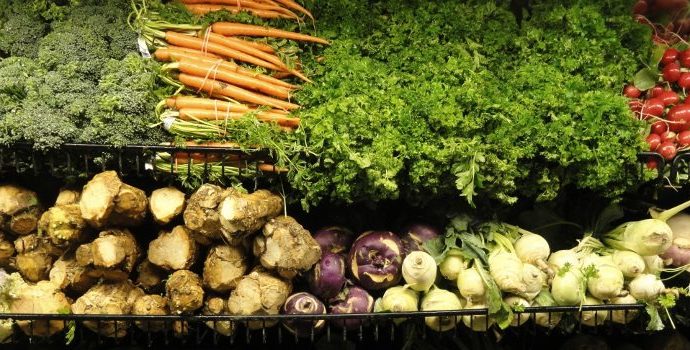
The past two months have been particularly challenging for growers harvesting root crops, including carrots, across Ireland. Prolonged periods of heavy rainfall and saturated soils have severely disrupted harvesting operations, limiting field access and significantly slowing progress. In some cases, crops have been left in the ground longer than planned, increasing the risk of quality deterioration, disease pressure, and yield losses. Where harvesting has been possible, difficult conditions have led to higher costs due to reduced efficiency, increased labour requirements, and additional machinery wear. These adverse conditions have placed further financial strain on growers at a time when margins are already under significant pressure from rising input and labour costs.
Labour costs have risen sharply for horticulture growers following Budget 2026, placing further pressure on an already highly labour-intensive sector. Increases in the national minimum wage have a disproportionate impact on horticultural enterprises, where labour represents a significant proportion of total production costs and cannot be easily offset through efficiency gains or higher farmgate prices. From March, further cost pressures will arise from increases in General Employment Permit remuneration thresholds for horticulture, significantly raising the cost of employing non-EU workers at a time when domestic labour is unavailable. In addition, the introduction of the auto-enrolment pension scheme will impose new direct costs and administrative obligations on employers. While growers support measures to improve worker security, the cumulative impact of higher wages, increased permit costs, and pension contributions will further erode margins and threaten the viability and competitiveness of many horticultural businesses unless these costs are recognised and fairly reflected within the supply chain.
Food Regulator
In December of last year, additional statutory powers were granted to the Office of the Agri-Food Regulator, strengthening its ability to oversee and enforce fairness within the food supply chain. These enhanced powers allow the Office to formally require information from processors and retailers, improving transparency and enabling more effective investigation of unfair trading practices. IFA has long advocated for these measures and welcomes their introduction as a necessary step in addressing imbalances in bargaining power between primary producers and larger supply-chain actors. It is essential that these powers are now fully utilised and adequately resourced to deliver meaningful outcomes for growers and to ensure that increased production and compliance costs are fairly reflected in returns to farmers
Residential Zoned Land Tax (RZLT)
Budget 2026 gives another opportunity for landowners subject to RZLT in 2026 to request a change from their Local Authority in the zoning of their land and avail of an exemption from RZLT liability.
“There will be an exemption from the 2026 RZLT liability if a landowner applies for a rezoning to reflect the “genuine economic activity currently being carried out on the land”
This remains a temporary solution from a tax that is unfair to genuine farmers of land that falls within the scope of RZLT. Responsibility to gain the exemption and the cost associated with gaining the exemption falls back on the landowner. IFA has campaigned to have a permanent solution that will remove actively farmed land from the scope of residential zoned land tax. This remains the policy of IFA. IFA’s position remains that landowners with declared agricultural activity must be removed from the scope of residential zoned land tax.
Activity since last National Council
- An IFA horticulture delegation led by President Francie Gorman met with Minister Peter Burke in January on the General Employment Permit and the further roll-out of the seasonal work permit scheme.
- IFA put a submission to the Department of Enterprise in December on the pilot seasonal employment permit for Horticulture.
- IFA attended a meeting of the steering group on the seasonal work permit scheme highlighting the necessity for the scheme to be rolled out immediately in 2026 and for the scheme to be aligned with National minimum wage.
- An Organic Project Team meeting was held online in January.
- IFA held a Fruit and Vegetable committee meeting in November in the Irish Farm Centre. Bord Bia attended the meeting and presented their new three-year strategy.
- An IFA mushroom delegation met with DAFM officials in January to discuss automation in the sector.
- IFA continued to attend monthly meetings of the HIF sub-committee.
- IFA continued to liaise with all retails and packers on how the season is unfolding, the weather conditions, staffing costs and all other issues.
- A successful Trolley Fair was held on Kelly’s Nursery Mullingar on February 3rd. Over 170 trolleys were exhibiters to customers.
- IFA recently arranged a meeting with a laboratory specialising in isotope testing of potato and vegetable products, in response to concerns arising from recent instances of mislabelled produce identified in Irish retail outlets. The meeting explored how isotope analysis can be used to verify product origin and support traceability within the supply chain. This engagement forms part of IFA’s ongoing work to address mislabelling issues and to strengthen enforcement and transparency across the retail supply chain.
EU/COPA Developments
- IFA continues to engage with our COPA COGECA counterparts on all issues.
Upcoming Events / Issues
- The next HIF full committee meeting will be held on March 24th in Backweston, co- chaired by Minister Healy Rae.