Potato Council Report May 2026

Potato Market Report
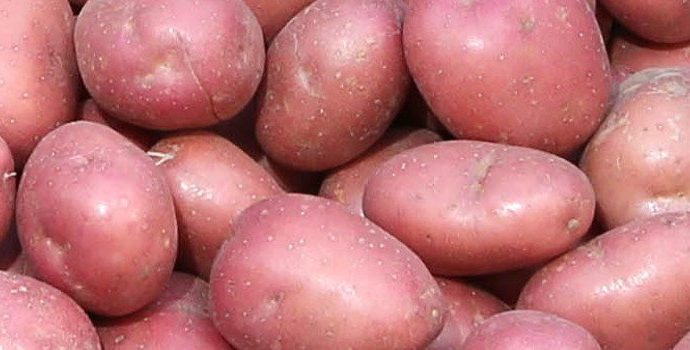
Consumption trends remain stable, with retail sales reported as typical for this time of year, providing some underlying support to the market. Demand for packing-quality Rooster and white varieties continues. Despite high stocks of potatoes across the continent, a few Irish growers have exported loads of potatoes to the continent with reports indicating scope for some more movement.
Improved weather conditions in late April have allowed planting to progress across most regions. However, earlier delays mean this is not an early season, and further progress remains weather dependent.
Cost of production continues to dominate at farm level with continued unrest in the Middle East. Input costs remain elevated, with ongoing volatility in energy markets, driven by global instability which is impacting fertiliser, transport, and storage costs. Storage is expected to be significantly more expensive this season compared with historical norms.
As the storage season advances, quality issues are becoming more evident, including skin finish and internal defects. This is resulting in increased volumes being diverted into the peeling market, creating oversupply and placing downward pressure on returns.
Growers are finalising planting and variety decisions in the context of continued uncertainty around input costs, plant protection availability, seed supply, labour, and compliance requirements.
European Market
Across Europe, export demand remains generally subdued. However, there is continued interest in specific categories, particularly washing-quality reds in France, where availability is tightening.
Processing markets remain weak across the EU, with limited demand outside of contract. Surplus stocks are increasingly difficult to place, particularly into peeling and secondary outlets, with prices under pressure.
Early indications suggest that planted area in some regions may decline. Reports indicate that Spain could see one of its lowest planted areas on record, reflecting both cost pressures and market uncertainty.
Food Regulator
In December of last year, additional statutory powers were granted to the Office of the Agri-Food Regulator, strengthening its ability to oversee and enforce fairness within the food supply chain. These enhanced powers allow the Office to formally require information from processors and retailers, improving transparency and enabling more effective investigation of unfair trading practices. IFA has long advocated for these measures and welcomes their introduction as a necessary step in addressing imbalances in bargaining power between primary producers and larger supply-chain actors. It is essential that these powers are now fully utilised and adequately resourced to deliver meaningful outcomes for growers and to ensure that increased production and compliance costs are fairly reflected in returns to farmers.
Residential Zoned Land Tax (RZLT)
Budget 2026 gives another opportunity for landowners subject to RZLT in 2026 to request a change from their Local Authority in the zoning of their land and avail of a exemption from RZLT liability.
“There will be an exemption from the 2026 RZLT liability if a landowner applies for a rezoning to reflect the “genuine economic activity currently being carried out on the land”
This remains a temporary solution from a tax that is unfair to genuine farmers of land who fall within the scope of RZLT. Responsibility to gain the exemption, and the cost associated with gaining the exemption falls back on the landowner. IFA has campaigned to have a permanent solution that will remove actively farmed land from the scope of residential zoned land tax. This remains the policy of IFA. IFAs position remains that landowners with declared agricultural activity must be removed from the scope of residential zoned land tax.
Activity since last Council
- IFA held a regional potato meeting in the CityNorth Hotel last month. Market challenges were addressed at the meeting and Teagasc Potato Specialist Shay Phelan also gave a presentation.
- A full meeting of the Horticulture Industry Forum meeting took place in March. Jason O’Leary briefed Minister Healy Rae on the challenges facing the industry during the meeting
- IFA met with PCRD in DAFM in March to discuss plant protection products and the Simplification Omnibus.
- IFA wrote to Minister John Cummins on the issue of rates, requesting a meeting and detailing examples of where issues are arising.
- The IFA Potato Committee travelled to Brussels in January to engage with Irish MEP’s and COPA-COGECA on key issues impacting the potato sector, with a particular focus on the ongoing challenges around seed potato availability. Committee members met with a number of Irish MEPs to highlight the critical importance of securing reliable access to high-quality seed, Plant Protection products and the negative implications that regulatory barriers continue to have on Irish potato production.
- IFA recently arranged a meeting with a laboratory specialising in isotope testing of potato and vegetable products, in response to concerns arising from recent instances of mislabelled produce identified in Irish retail outlets. The meeting explored how isotope analysis can be used to verify product origin and support traceability within the supply chain. This engagement forms part of IFA’s ongoing work to address mislabelling issues and to strengthen enforcement and transparency across the retail supply chain.
- IFA continues to attend monthly meetings of the HIF sub-committee.
- IFA continued to liaise with all retails and packers on how the season is unfolding, the weather conditions, staffing costs and all other issues.
- IFA continues to lobby for all potato farmers to be excluded from commercial rates as per the Valuation Act. In recent years there has been an increase in inspections on potato, tillage and horticulture premises by Local Government on behalf of the Valuation Office. Inspectors are deeming storage sheds, packing sheds, and washing bays ratable. These buildings are not ratable by virtue of constituting “Farm buildings” as defined in the Valuation Act 2001. If a precedent is set, then almost all agriculture buildings could be viewed as ratable.
Upcoming Activity/Events
- IFA will continue to monitor the origin of produce with the use of Isotope testing.
- IFA continues to engage with retailers on crop availability and setting up meetings with retailer buyers and packers at this critical period.
- IFA will continue to contact growers to ensure they are aware of the costs of production and engage in both stocks/acreage surveys.