Horticulture Council Report May 2026

Market Report
It has been a particularly challenging spring for horticulture growers across Ireland, with weather conditions impacting multiple sectors in different ways. For field crops, including carrots and other root vegetables, prolonged periods of heavy rainfall and saturated soils through late winter and early spring severely disrupted harvesting operations. Field access was limited which slowed progress in some cases. In some cases, crops were in the ground longer than planned which did increase the risk of quality deterioration, disease pressure, and yield losses.
Where harvesting has been possible, difficult ground conditions have resulted in higher costs due to reduced efficiency, increased labour requirements, and additional machinery wear. While weather conditions have improved in late April, allowing some recovery in field activity, the season remains behind normal timelines and is not considered early.
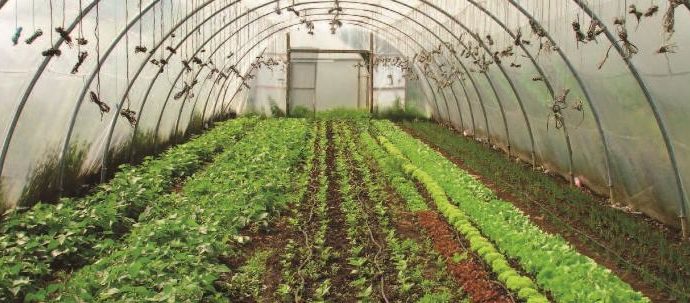
In the protected crop sector, reduced light levels over recent months have negatively impacted growth rates and output. Lower radiation levels have reduced yields and extended growing cycles, placing additional pressure on already tight margins. This has come at a time when energy use remains high, further increasing production costs for growers.
The mushroom sector is also experiencing a difficult period, with weaker-than-expected retail sales in early 2026 impacting returns. This is particularly challenging given that labour accounts for a significant proportion of production costs in the sector, leaving growers highly exposed to cost increases. Combined with elevated energy costs, margins across the mushroom sector remain under significant pressure.
Input costs remain the dominant issue across all horticultural sectors, with sustained and, in many cases, escalating pressures. Labour costs have risen sharply following Budget 2026, with increases in the national minimum wage and higher General Employment Permit remuneration thresholds now fully feeding through into April. In addition, the long-promised seasonal work permit scheme was not rolled out in 2026, further exacerbating labour shortages and increasing reliance on more costly labour sources. This is having a direct negative impact on the sector’s ability to operate efficiently during peak periods.
The introduction of the auto-enrolment pension scheme will impose further direct costs and administrative burdens on employers. At the same time, energy costs remain highly volatile, with ongoing instability linked to conflict in the Middle East driving fluctuations in global gas markets. This is having direct knock-on impacts for electricity, fertiliser, and green diesel prices, leaving growers exposed to unpredictable and elevated input costs.
While the Irish Government has introduced support schemes for agriculture in response to rising costs, the current structure provides limited benefit to the horticulture sector, where exposure to labour and energy costs is significantly higher and more concentrated.
Retail demand remains relatively stable; however, returns to growers are not keeping pace with rising production costs. This growing imbalance is placing increasing financial strain on producers, particularly where quality challenges linked to difficult harvesting conditions have reduced marketable output or diverted produce into lower-value outlets.
Food Regulator
In December of last year, additional statutory powers were granted to the Office of the Agri-Food Regulator, strengthening its ability to oversee and enforce fairness within the food supply chain. These enhanced powers allow the Office to formally require information from processors and retailers, improving transparency and enabling more effective investigation of unfair trading practices. IFA has long advocated for these measures and welcomes their introduction as a necessary step in addressing imbalances in bargaining power between primary producers and larger supply-chain actors. It is essential that these powers are now fully utilised and adequately resourced to deliver meaningful outcomes for growers and to ensure that increased production and compliance costs are fairly reflected in returns to farmers
Residential Zoned Land Tax (RZLT)
Budget 2026 gives another opportunity for landowners subject to RZLT in 2026 to request a change from their Local Authority in the zoning of their land and avail of a exemption from RZLT liability.
“There will be an exemption from the 2026 RZLT liability if a landowner applies for a rezoning to reflect the “genuine economic activity currently being carried out on the land”
This remains a temporary solution from a tax that is unfair to genuine farmers of land who fall within the scope of RZLT. Responsibility to gain the exemption, and the cost associated with gaining the exemption falls back on the landowner. IFA have campaigned to have a permanent solution that will remove actively farmed land from the scope of residential zoned land tax. This remains the policy of IFA. IFA’s position remains that landowners with declared agricultural activity must be removed from the scope of residential zoned land tax.
Activity since last National Council
- A full meeting of the Horticulture Industry Forum meeting took place in March. Mark Walsh, Niall McCormack and other industry leads briefed the Minsiter on key challenges.
- IFA met with PCRD in DAFM in March to discuss plant protection products and the Simplification Omnibus.
- IFA wrote to Minister John Cummins on the issue of rates requesting a meeting and detailing examples of where issues are arising.
- IFA attended an online meeting of the COPA COGECCA working group.
- An Organic Project Team meeting was held on April 25th online.
- An IFA mushroom delegation continues to engage with DAFM to pursue a feasibility study on automation in the mushroom industry.
- IFA continue to attend monthly meetings of the HIF sub-committee.
- IFA continued to liaise with all retails and packers on how the season is unfolding, the weather conditions, staffing costs and all other issues.
- A successful Trolley Fair was held on Kelly’s Nursery Mullingar earlier this year. Over 170 trolleys were exhibiters to customers.
- IFA recently arranged a meeting with a laboratory specialising in isotope testing of potato and vegetable products, in response to concerns arising from recent instances of mislabelled produce identified in Irish retail outlets. The meeting explored how isotope analysis can be used to verify product origin and support traceability within the supply chain. This engagement forms part of IFA’s ongoing work to address mislabelling issues and to strengthen enforcement and transparency across the retail supply chain.
EU/COPA Developments
- IFA continues to engage with our COPA COGECA counterparts on all issues.