Horticulture Council Report 29th July
The 2026 growing season has continued to present significant challenges for horticulture growers across Ireland. Following an exceptionally wet spring, which disrupted field operations and delayed planting and harvesting, the prolonged period of warm, dry weather experienced throughout June and into July has introduced a new set of challenges. Soil moisture deficits have become increasingly widespread, placing pressure on crop development and increasing reliance on irrigation.
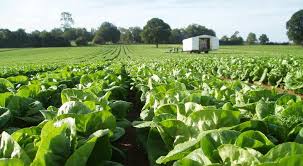
For field vegetable crops, the prolonged dry spell has affected crop establishment and development, particularly where irrigation capacity is limited. Moisture stress is beginning to affect crop sizing and uniformity, with concerns that continued dry weather will reduce both yields and marketable output. Growers are irrigating where possible but at considerably higher operating costs due to increased water and energy use.
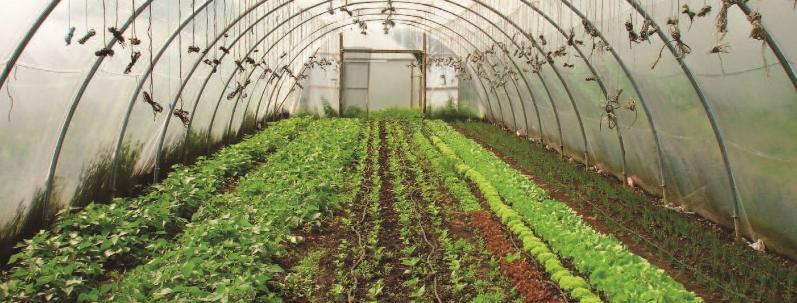
Within the protected crop sector, consumer demand has been excellent, however, conditions have also been challenging. Prolonged periods of hot weather put crops under pressure and create flushes of produce which are difficult to manage. This is often followed by spells of lesser production as plants are stressed.
The mushroom sector continues to face a challenging trading environment, with weaker retail demand during the first half of the year continuing to impact returns. Labour remains the largest component of production costs, leaving growers particularly exposed to rising wage costs. Combined with elevated energy prices, margins across the mushroom sector remain under significant pressure despite relatively stable production levels.
Input costs continue to represent the dominant challenge across all horticultural sectors. The continued absence of a seasonal horticultural work permit scheme has further exacerbated labour shortages. The introduction of the auto-enrolment pension scheme posed additional direct costs and administrative requirements on employers.
Fuel Support Scheme for Specialist Horticulture,
Recognising the severe impact of rising energy costs on the protected horticulture sector, IFA made a detailed submission to the Department of Agriculture, Food and the Marine outlining the significant exposure of growers to increased fuel and heating costs. The submission highlighted that protected crop growers and mushroom producers are particularly vulnerable due to their reliance on energy-intensive production systems, where energy usage cannot be significantly reduced during active production periods without impacting crop output and quality. Following engagement between IFA and DAFM officials, the Government announced the opening of the Fuel Support Scheme for Specialist Horticulture, providing targeted financial support to eligible specialist horticulture growers to help offset increased fuel costs. This represents an important recognition of the cost pressures facing the sector, although ongoing challenges around energy, labour and production costs continue to place significant pressure on grower margins.https://www.gov.ie/en/department-of-agriculture-food-and-the-marine/services/fuel-support-scheme-for-specialist-horticulture/?utm_source=chatgpt.com
Activity since last National Council
- A meeting of the Horticulture Committee took place virtually last month.
- IFA continued to engage with the PCRD division in DAFM in March to discuss plant protection products and the Simplification Omnibus. IFA will hold a growers’ meeting on the topic in September.
- Members of the mushroom committee continue to engage with DAFM on a fund for automation for the sector.
- IFA continued a round of meeting with all retailers in conjunction with the Horticulture Industry Forum on the Retail Charter.
- A Joint Oireachtas Committee meeting on Peat took place last month, Val Farrell IHNSA chair and Frank Corbally, consultant to the mushroom sector attended the meeting alongside Growing Media Ireland.
- The IHNSA/IFA hosted a successful ENA summer meeting in Dublin last month. Delegates from all EU members states attended the meeting and visited a number of Irish nurseries.
- IFA continued to engage with DETE and the Minister office on the seasonal work permit scheme following the announcement that the scheme will be rolled out on a pilot basis for the second time in Q3 2026.
- IFA wrote to Minister John Cummins on the issue of rates requesting a meeting and detailing examples of where issues are arising.
- IFA attended an online meeting of the COPA COGECCA working group.
- An IFA mushroom delegation continues to engage with DAFM to pursue a feasibility study on automation in the mushroom industry.
- IFA continues to attend monthly meetings of the HIF sub-committee.
- IFA continued to liaise with all retails and packers on how the season is unfolding, the weather conditions, staffing costs and all other issues.
- IFA recently arranged a meeting with a laboratory specialising in isotope testing of potato and vegetable products, in response to concerns arising from recent instances of mislabelled produce identified in Irish retail outlets. The meeting explored how isotope analysis can be used to verify product origin and support traceability within the supply chain. This engagement forms part of IFA’s ongoing work to address mislabelling issues and to strengthen enforcement and transparency across the retail supply chain.