
TB Information
The current TB situation must be brought under control. In the past 12 months, over 6,000 farmers have lost more than 40,000 productive animals through no fault of their own. This must stop.
Farmers are the only directly impacted stakeholders, with a recent IFAC report estimating the cost of the TB eradication program at €174 million direct costs to farmers. The programme is not working and must be revised with decisions that actually reduce TB levels. Any measures must be practical, proportionate, and fully compensate farmers for any added burden.
Wildlife remains the most significant cause of TB spread. Since 2018, vaccination replaced culling in the Wildlife Programme, undermining its effectiveness. The study used to justify this shift accepted undisclosed increases in TB in cattle. Many areas now in the vaccination programme don’t meet original criteria, yet DAFM expanded the programme regardless.
Vaccination has failed. No population control exists in vaccinated areas, implementation is inconsistent, and many farmers report no activity for years. As a result, TB outbreaks have risen, causing severe financial and emotional strain. DAFM must accept their own findings: vaccination has cost farmers and the exchequer over €200m annually. The decision to continue post-trial was irresponsible.
TB numbers fell from 40,000 in the 1990s to under 15,000 by the mid-2010s due to culling. They began rising again after vaccination started in 2018. While DAFM blames animal movements, no studies justify the emphasis. Measures must be evidence-based, practical, and costed.
DAFM lacks the staff to manage the current programme, let alone enhancements. Over 6,000 herds are restricted, yet staffing is below past levels. Payments are delayed, investigations are under-resourced, and the Wildlife Programme is critically short-staffed. Enhancements are meaningless without proper implementation.
IFA’s proposals focus on effective actions that reduce TB, while compensating farmers for any new burdens. As TB levels drop, overly costly or restrictive measures must be reviewed and rolled back.
IFA Proposed Enhanced TB Programme Measures
1. Government must commit to providing the resources necessary to implement an effective and efficient TB programme consistently throughout the country, this includes financial, veterinary, technical and administrative supports.
2. The Wildlife Control Programme must revert to density reduction to bring the badger population to the previously identified DAFM figure of a maximum of 0.5 badgers/sq km to reduce the potential of badger to cattle transmission.
3. Deer Management Units (DMUs) as part of the National Deer Management Strategy to reduce deer numbers must be established in all high prevalence TB areas where deer are present.
4. The DAFM must cease communications on Herd Categorisation and Risk Based Trading. This approach does not stop the movement of potentially TB infected animals, unfairly and unnecessarily devalues farmers livestock who through no fault of their own have recently exited a TB restriction. The recent figures of C10 herds who have TB breakdowns also further discredits this approach
5. The DAFM must implement density reduction of all TB susceptible wildlife in advance of any major ground disturbance works and deforestation in recognition of the recent UCD study findings which were presented to the TB Forum if we are serious about trying to stop new TB breakdowns.
6. The DAFM in consultation with farm organisations must finalise and implement contract rearing Risk Management Plans.
7. The DAFM must develop, in consultation with farm organisations, practical Risk Management Plans for all farmers to be used through the farmers own Private Veterinary Practitioner (PVP) to help drive awareness of TB risk and provide advice on appropriate precautions.
8. To address the concerns raised by the DAFM in relation to the lower sensitivity of the SCIT test and the potential for TB infected animals to remain within herds the more sensitive GIF test should be used in herds where within herd TB spread is confirmed.
9. To complement the proposal at point 8 and further reduce the likelihood of Higher Risk TB animals leaving dairy herds, a compulsory pre movement test for dairy cows entering dairy herds should be introduced. This measure when applied with point 8 significantly reduces the likelihood of TB introduction to dairy herds. The combination of using the GIF test in the original breakdown in herds, which compensates for the lower sensitivity of the SCIT test, reduces the likelihood of TB infected animals remaining in the herd and the compulsory requirement then for all cows entering dairy herds provides additional protection to the purchasing herd. The proposal focuses just on dairy cows entering dairy herds as these are the herds and the animals that proportionately have most TB when measured on Herd Incidence and APT. This measure is not appropriate or necessary for consideration in suckler herds based on their Herd Incidence and APT figures.
10. The DAFM must promote the use of TB resistant bulls.
11. The DAFM must advance development of an effective cattle vaccination for TB and a suitable test to differentiate vaccinated animals from infected animals while in parallel addressing the potential market access concerns at EU and international level.
12. The DAFM must provide grant aid to farmers implementing bio security measures on farm that reduces wildlife access to critical areas.
13. Recognising the need to intensify efforts in the TB programme in high risk and larger TB breakdowns, there is also a need to balance this in breakdowns that are not high risk. Factory lesion restrictions must be shortened where it is established there is no further TB reactors on the farm. 85% of these breakdowns do not disclose any further TB reactors on the farm, maintaining a restriction for 120 days spanning two 60-day tests on these farms is unnecessary.
IFA TB Publications
Below are the latest IFA TB publications and submissions.
IFAC Analyses of TB Programme Costs to Farmers 2025
TB Forum Submission on the Tuberculosis Eradication Programme 2025
The Devastating Impact of TB | One Farmer’s Story
DAFM Publications
Please click on the links below for more details.
Summary of Market Prices for Week Commencing October 5th 2026
Latest IFA TB Updates
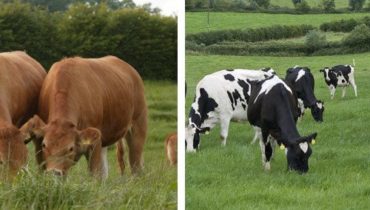
Minister Must do More to Deal with Threat of Bluetongue
Animal Health
Department Intervention Needed to Secure Adequate Lepto Vaccine Supply – IFA
Animal Health Ball Now in Minister’s Court Following TB Summit Meeting – IFA
Animal Health IFAC Report Identifies €150m Annual Cost of TB for Farmers
Animal Health Minister Must Provide His Draft TB Proposals to Stakeholders Before ‘Summit’
Animal Health
Minister Must Publish TB Proposals and Their Rationale and Funding Plans
Animal Health
Minister for Agriculture Must Have Clear Plan in Case of Bluetongue
Animal Health Additional Funding for Animal Health in Budget Must be Used Effectively
Animal Health Vet Medicines SI a Missed Opportunity
Animal Health
TB Reactor Numbers Escalate as Minister Reduces Staff Resources in TB Programme – IFA
Animal Health
EU VAT Directive an Opportunity for Government to Reduce VAT Rate on Vaccines – IFA
Animal Health